

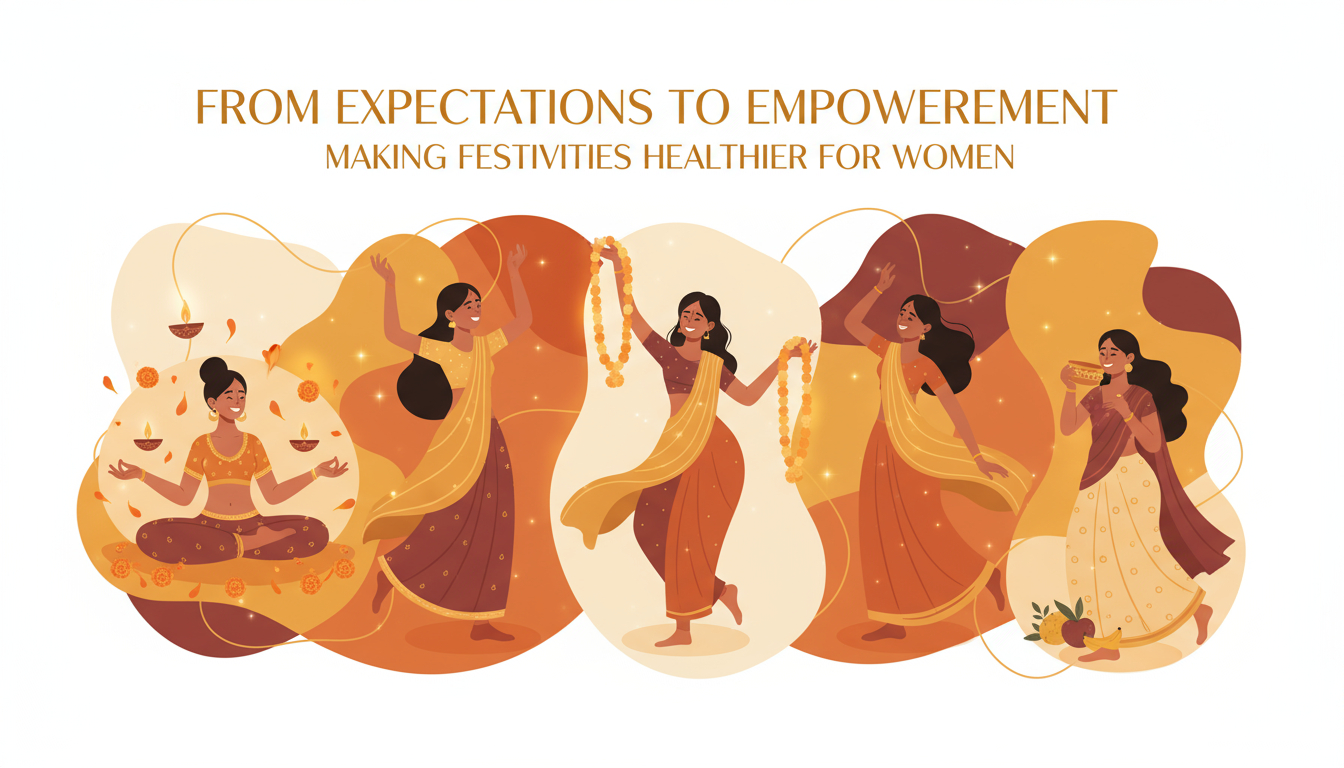

As the lights of Navaratri fade and Diwali draws near, the air is filled with colour, music, and celebration. But beneath the shimmer of festivity lies a quieter truth one that many women silently shoulder.
For countless women across India, the festive season can bring not just joy but also overwhelming stress, sleepless nights, and mental fatigue. Between juggling family duties, managing work, and meeting social expectations, the joy of celebration can quickly turn into emotional exhaustion.
The Invisible Weight of Celebration


Take the story of a retired woman who spends her Navaratri days hosting golu rituals, preparing offerings, and caring for her 93-year-old mother-in-law all without help. She performs these tasks with devotion, yet deep down, she wishes for rest.
Or Deepali from Ahmedabad, who rushes from her corporate office to attend evening aartis and garba. Every night, she returns home drained, only to repeat the routine because “it’s what’s expected.”
For many women, festivals have become a test of endurance rather than a time for rejuvenation.
The Pressure of Perfection
“During festivals, I feel like I must do it all decorate the house, prepare sweets, dress up, and perform every ritual perfectly all while managing a full-time job,” says Rekha Sahay Ghosh, a senior corporate professional.
These expectations, often self-imposed and reinforced by family or society, can lead to guilt, anxiety, and burnout. When the checklist of tasks becomes longer than the hours in a day, mental health begins to suffer.
Women start questioning their worth, feeling guilty for not doing “enough,” even when they are already doing more than most.
Cultural Pressure Meets Emotional Fatigue


Dr. Roma Kumar, Chief Psychologist at Emotionally, explains that performance pressure during festivals can take a serious toll.
“Our society still believes women are the ones responsible for festive arrangements from cooking to rituals. This sense of duty, combined with social judgment, can lead to stress, fatigue, and low self-esteem,” she notes.
The result? Women who are too exhausted to enjoy the celebrations they worked so hard to create.
Turning the Tide: From Expectation to Empowerment
Festivals should be a time of connection, not competition. Mental health experts say it’s time women reclaim joy without guilt.
Here are a few small but powerful ways to make that shift:
- Set Boundaries: It’s okay to say no to overcommitment.
- Ask for Help: Share responsibilities with family celebrations should never be a one-person show.
- Prioritise Rest: Keep time for yourself, even during festivities.
- Focus on Meaning, Not Perfection: The true essence of celebration lies in togetherness, not flawless execution.
- Practice Self-Care: Dress up, rest, laugh not for tradition, but for yourself.
The Role of Families and Communities
Support systems make all the difference. Families that share responsibilities and appreciate women’s efforts create a happier, healthier environment for everyone.
“Festivals are for everyone,” says communications leader Shweta Papriwal. “It’s unfair that women do all the work while others enjoy. Equal participation makes celebrations more meaningful.”
Empathy, understanding, and shared responsibility these are the real lights that make Diwali, Christmas, and every festival brighter.