

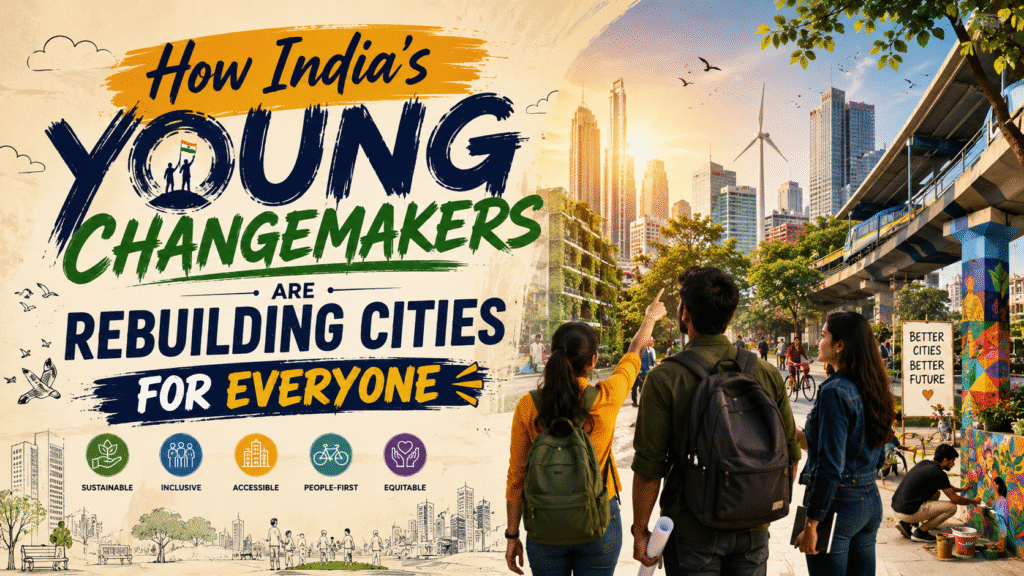

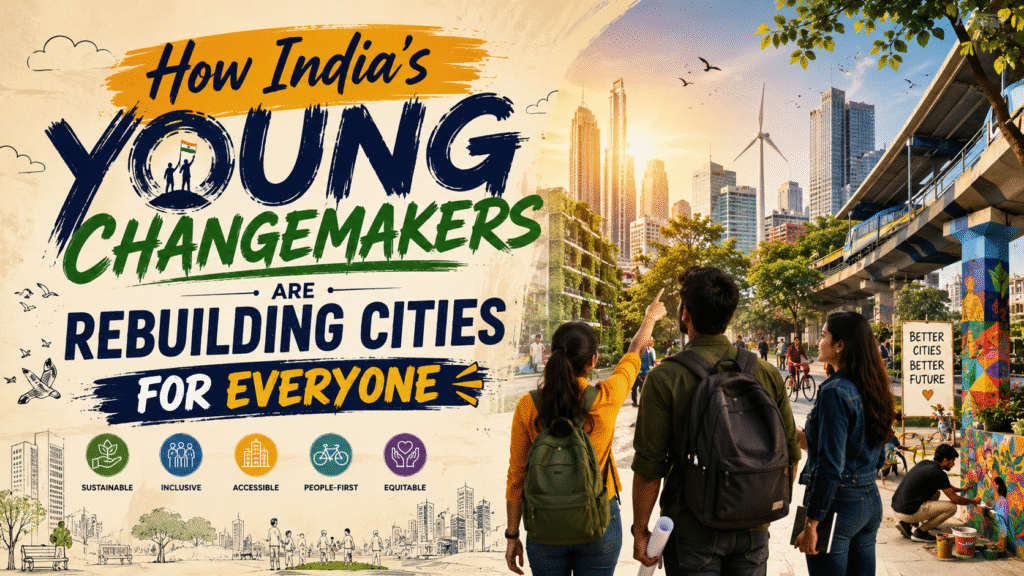
How Young Leaders Are Making Indian Cities More Inclusive and Accessible
As India’s cities grow faster than ever, one important question is becoming impossible to ignore:
Who are our streets really designed for?
For millions of women, elderly citizens, and people with disabilities, moving through Indian cities is still exhausting, unsafe, and deeply inconvenient. Broken footpaths, inaccessible bus stops, poor lighting, and unsafe public spaces continue to make everyday travel a struggle.
But a new generation of young changemakers is trying to change that.
The Mobility Champions Program by Young Leaders for Active Citizenship (YLAC) is empowering young Indians to rethink how cities function — and more importantly, who they serve.
Instead of treating urban mobility as just a policy discussion, the initiative brings students directly into the field, where they document real problems, conduct accessibility audits, engage with communities, and advocate for more inclusive public spaces.
The goal is simple: build cities that work for everyone.
Making Public Transport More Inclusive
One powerful campaign emerged through a partnership with the Nipman Foundation.
Mobility Champion Shreya Chaurasia helped lead “Bus Pe Chalo,” a campaign advocating for accessible public buses in Delhi.
The initiative pushed for external audio announcements on buses so visually impaired commuters could identify routes and bus numbers more easily.
The campaign combined grassroots engagement with policy advocacy.
Students conducted commuter interviews, organised awareness sessions, gathered signatures, and directly engaged with transport authorities including the Delhi Transport Corporation.
More than just a campaign, it became a reminder that accessibility is not a luxury it’s a basic right.
Reimagining the Future of Indian Cities
YLAC believes the programme is not about changing national policy overnight.
It’s about helping young citizens deeply understand how cities work and giving them the confidence to improve their communities from the ground up.
And the long-term impact is already visible.
Several alumni have gone on to work with policy think tanks, urban planning organisations, and even government bodies like NITI Aayog.
Some have even launched their own initiatives focused on accessibility and urban mobility.
The larger vision is clear:
Cities should not only be built for cars and infrastructure.
They should be built for people.
Especially those who have been ignored for far too long.