


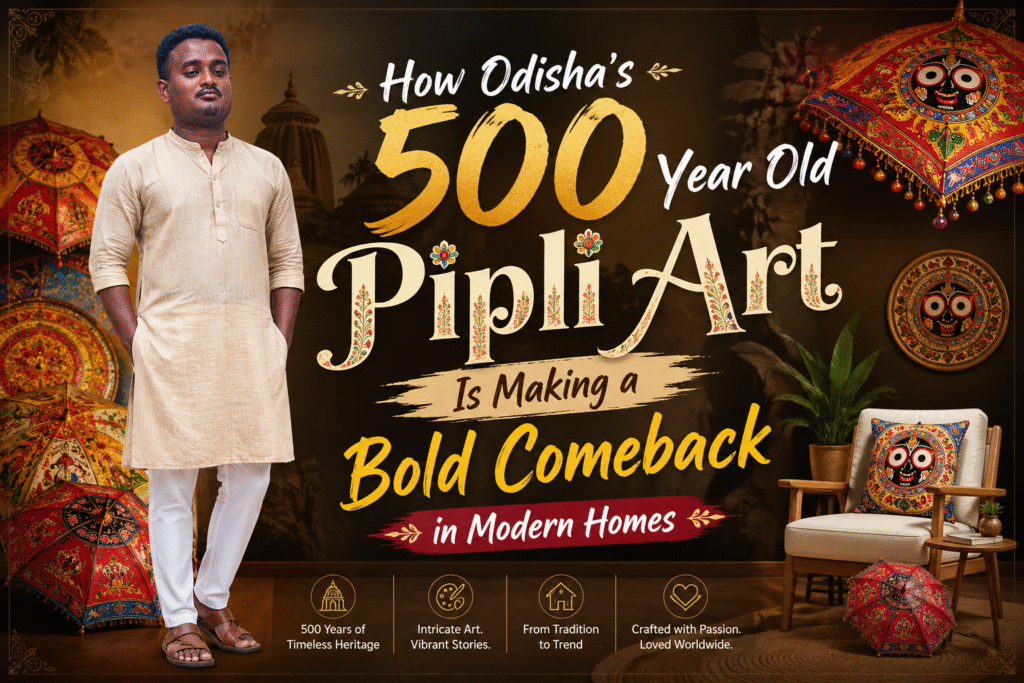
From Temple Rituals to Trendy Interiors: The Rise of Pipli Art
Some traditions fade with time. Others evolve, adapt, and return stronger than ever. Odisha’s iconic Pipli appliqué art is doing exactly that.
Once created for temple rituals and grand processions, this centuries-old craft is now finding fresh life inside stylish homes, modern wardrobes, and contemporary spaces while proudly preserving its roots.
Just a few kilometres from Bhubaneswar lies the vibrant village of Pipli, where art isn’t locked inside galleries. It lives on streets, hangs from shopfronts, and fills homes that double as workshops.
Here, craft is not a hobby. It is a way of life.

Where Heritage Meets Everyday Life
Pipli and its world famous craft share the same name and the connection runs deep.
For generations, Pipli appliqué was closely tied to the sacred traditions of Jagannath Temple and the grand Rath Yatra festival.
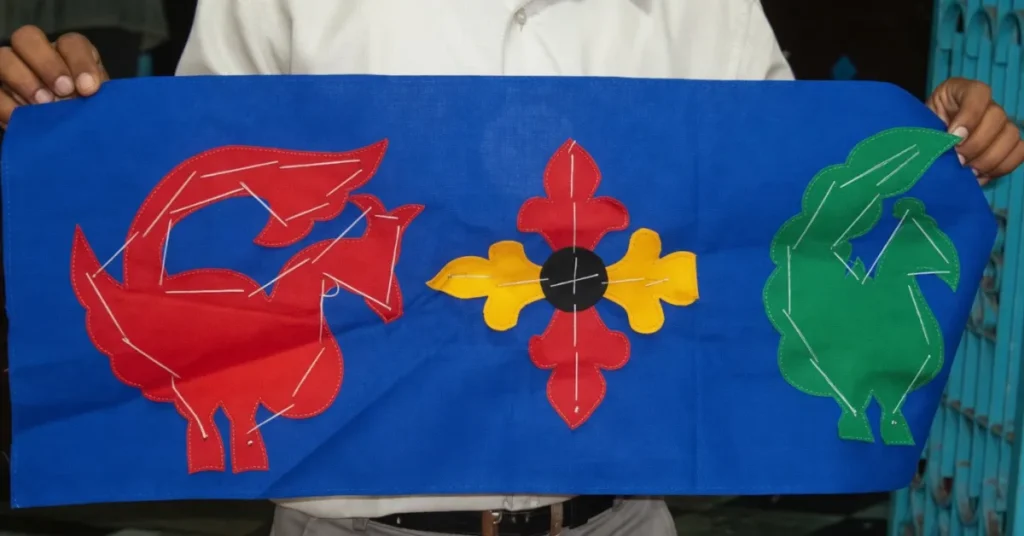
Artisans designed ceremonial canopies, umbrellas, banners, and decorative fabrics used in rituals. Every piece carried bold visual energy bright reds, yellows, greens, whites, and blacks stitched into symbols like elephants, peacocks, lotus flowers, and the sun.
These designs were meant to be seen from afar. They were loud, proud, and impossible to ignore.
The Smart Evolution of a Timeless Craft
Today, the same bold spirit remains but the destination has changed.
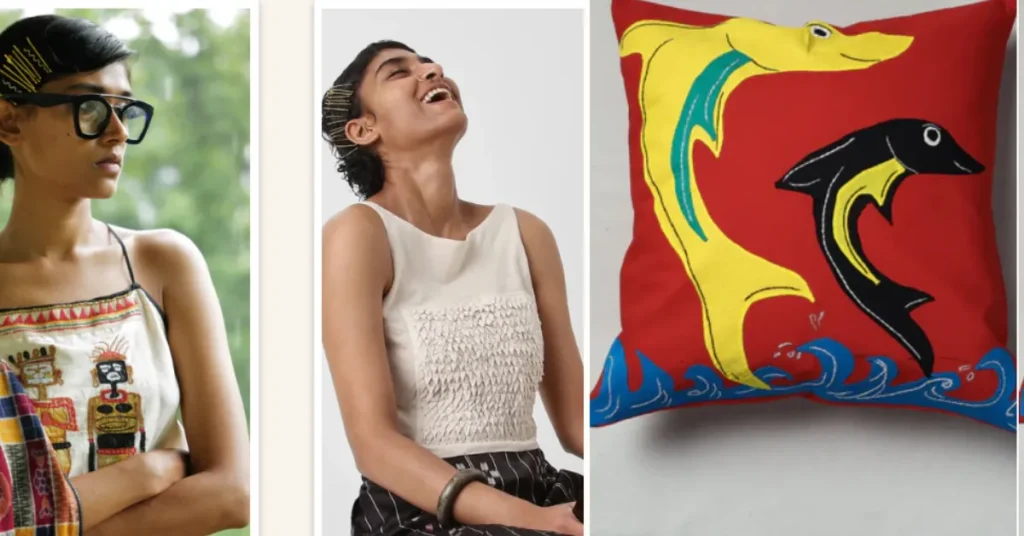
Instead of only temples and processions, Pipli art now appears in:
- Lampshades
- Cushion covers
- Wall décor
- Bedspreads
- Handbags
- Jackets and kurtas
- Statement home accessories
The technique still relies on layering colourful fabric pieces onto a base cloth, creating eye-catching patterns through contrast and texture.
But artisans are also innovating.
Silk, velvet, and satin are now used alongside cotton. Softer shades like pink, purple, and pastel tones have joined the classic palette. Mirrors, sequins, and embroidery add a fresh modern edge.
It’s not reinvention. It’s evolution.
From Village Streets to Online Orders
One of the biggest transformations is how Pipli reaches buyers.
Earlier, artisans depended on temple visitors, tourists, and government emporiums. Today, their creations travel through online stores, e-commerce platforms, and independent websites.
A handcrafted lampshade made in a small Pipli workshop can now light up an apartment in Mumbai.
That shift has created new income opportunities, wider markets, and direct customer demand all without losing the soul of the craft.