


These 4 Indian Villages Are Keeping Ancient Art Traditions Alive
Not all art lives inside museums.
Some of it breathes through colourful village walls, flows through generations of skilled hands, and survives quietly in places most travellers have never heard of.
Across India, there are villages where creativity isn’t just culture it’s everyday life. Paintings dry outside family homes. Clay spins on traditional wheels. Ancient techniques are passed from parents to children like treasured heirlooms.
Far away from crowded tourist spots and modern art galleries, these hidden creative hubs are preserving India’s artistic soul in the most authentic way possible.
From Odisha’s legendary painted village to Gujarat’s last surviving Rogan artists, here are four extraordinary Indian villages where art still shapes daily life.
1. Raghurajpur, Odisha The Village Where Every Home Feels Like an Art Gallery

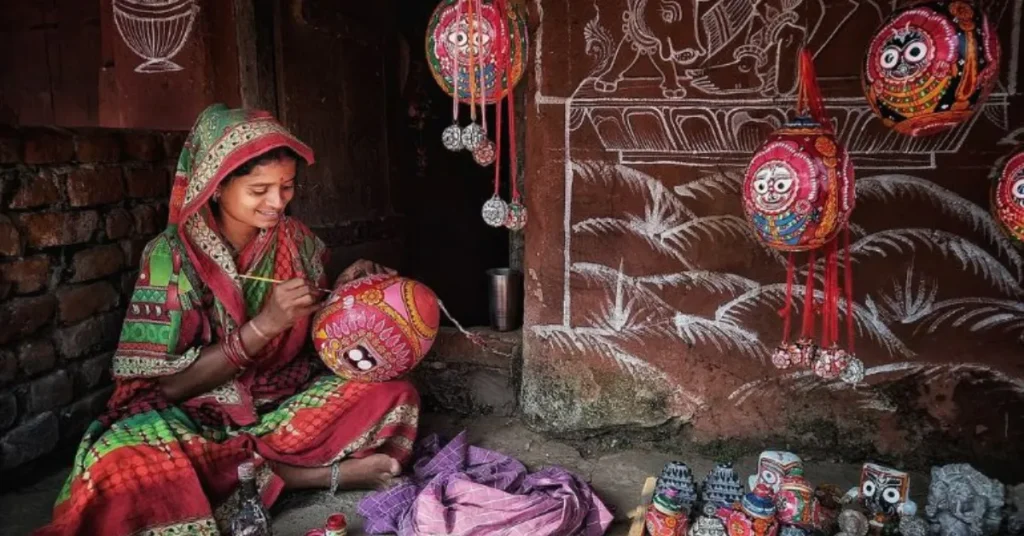
A short drive from Puri lies Raghurajpur, a breathtaking heritage village where almost every family is connected to art.
Walk through its narrow lanes and you’ll spot walls bursting with colourful murals, verandahs transformed into workshops, and artisans carefully painting intricate masterpieces by hand.
The village is globally known for Pattachitra art, one of India’s oldest traditional painting styles. Created on cloth and palm leaves, these artworks feature mythological stories, bold natural colours, and stunningly detailed designs.
But Raghurajpur offers more than beautiful paintings.
Visitors can watch artists at work in real time, learn palm-leaf engraving techniques, and buy handmade creations directly from the families preserving the craft. From papier-mâché toys to traditional masks and stone carvings, every corner of the village feels alive with creativity.
This isn’t just tourism it’s a rare glimpse into a living artistic legacy.
2. Andretta, Himachal Pradesh The Peaceful Mountain Village Built On Creativity
Hidden in the scenic Kangra Valley near Palampur, Andretta feels like a place where art and nature exist in perfect harmony.
Surrounded by pine forests and overlooking the majestic Dhauladhar mountains, the village has long attracted artists, writers, and dreamers searching for inspiration.
Its creative identity dates back to the 1920s when Irish theatre artist Norah Richards settled here and helped transform Andretta into a cultural haven.
Today, the village is especially famous for its handcrafted pottery.
The Andretta Pottery Studio and Norah Centre for Arts continue to draw visitors who want to experience traditional pottery-making firsthand. Travellers can explore exhibitions, attend workshops, or simply spend time soaking in the calm artistic atmosphere.
In a world obsessed with speed, Andretta invites people to slow down and create.
3. Nirona, Gujarat The Last Place Keeping Rogan Art Alive
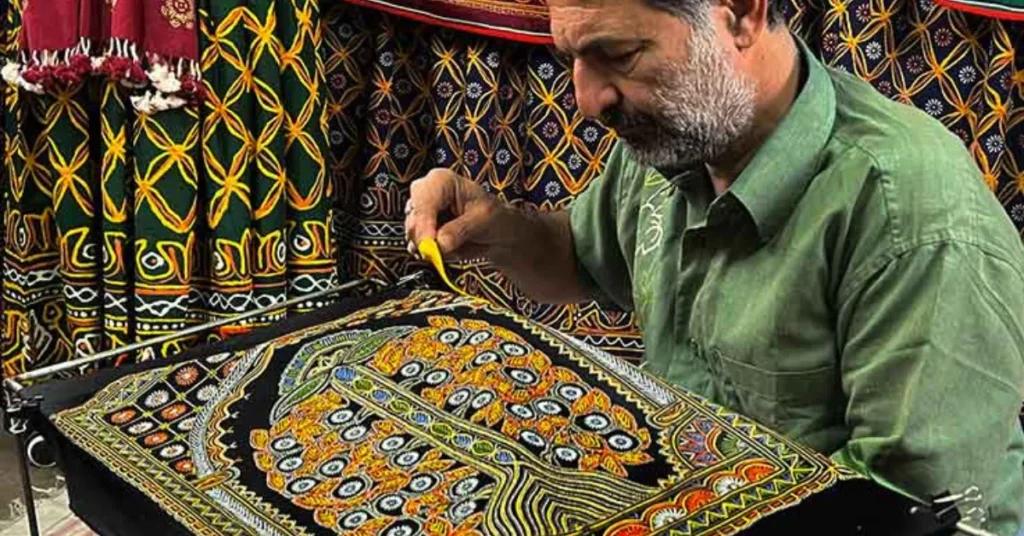
Deep inside Gujarat’s Kutch district lies Nirona, a small village protecting one of the rarest art forms in the world.
This is the last surviving home of Rogan art a centuries old technique where artists paint detailed patterns onto fabric using castor oil paste and natural pigments.
What makes the process extraordinary is that the artists create the designs without directly touching the cloth.
Every swirl, curve, and motif demands years of precision and patience.
The craft survives largely because of the Khatri family, who have preserved the tradition for more than eight generations. Visitors to Nirona can watch live demonstrations, hear the stories behind the art, and witness masterpieces that have earned international recognition.
Beyond Rogan art, the village is also known for traditional bell making and lacquer work, making it a hidden paradise for culture lovers.
4. Patangarh, Madhya Pradesh The Heartbeat Of Gond Art
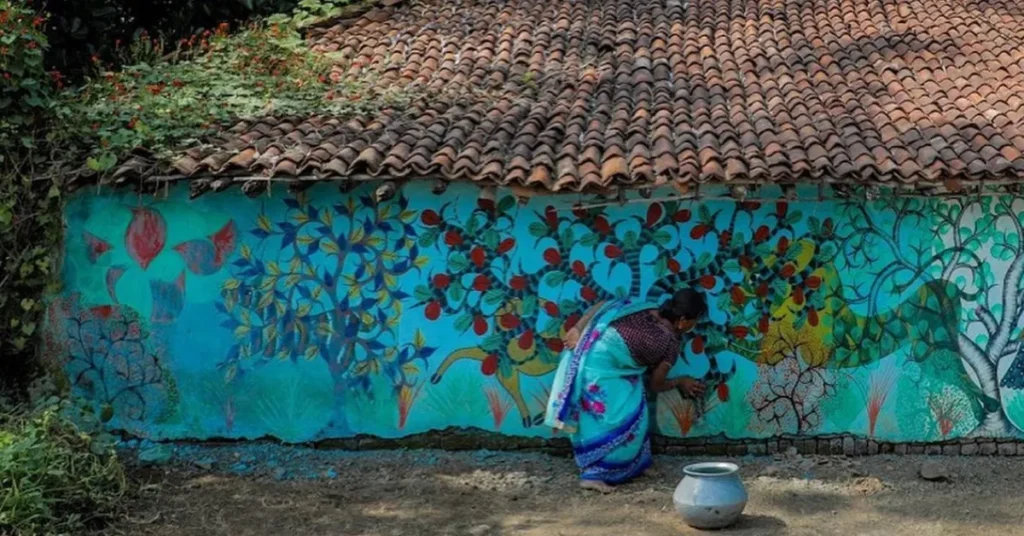
Tucked away in Madhya Pradesh, Patangarh is one of the most important villages in India’s folk-art landscape.
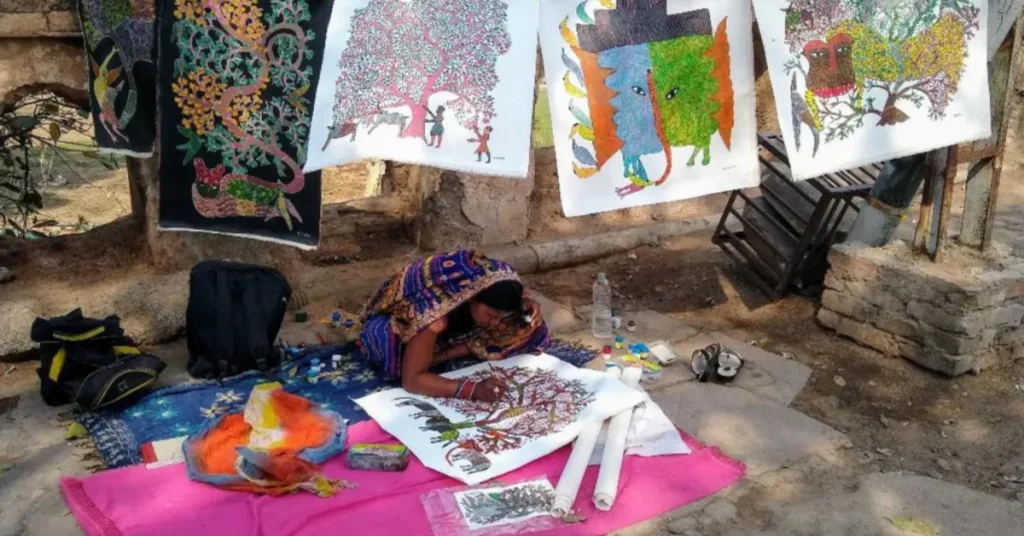
It is widely recognised as the birthplace of contemporary Gond art, a vibrant storytelling tradition inspired by forests, animals, folklore, and spiritual beliefs.
The village gained national attention through legendary artist Jangarh Singh Shyam, whose unique artistic style introduced Gond art to the global stage.
Even today, Patangarh remains home to artists who continue evolving the tradition while staying deeply connected to their roots.
The paintings are instantly recognisable for their intricate patterns, vivid colours, and mesmerising depictions of nature and village life.
But Gond art is more than decoration.
Every line, dot, and symbol carries meaning — telling stories that have travelled across generations.