
Why Collaboration Is Driving India's Next Wave of Social Impact
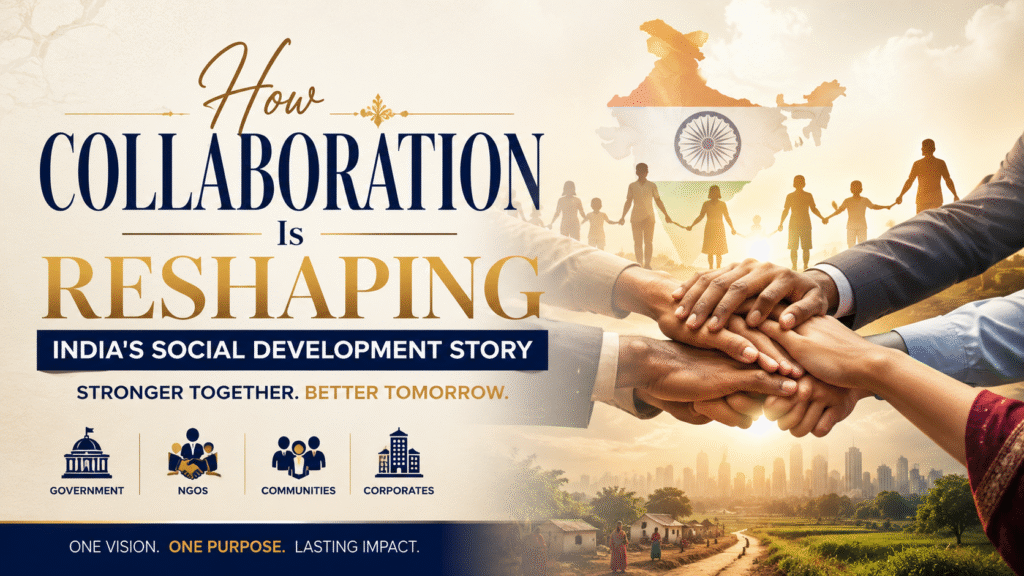
India’s biggest social challenges cannot be solved by one organization alone. From healthcare and education to clean water, livelihoods, and climate action, real progress happens when governments, NGOs, businesses, and local communities work together toward a common goal.
As more organizations expand into the same regions, a common question often arises: “Won’t multiple NGOs working in one village create unnecessary competition?” The answer is quite the opposite.
Unlike businesses that compete for customers and market share, the social sector exists to create meaningful change. Every organization brings different strengths, expertise, and resources. When these strengths come together, communities receive more comprehensive support instead of isolated solutions.
Across India, many villages are already benefiting from this collaborative approach. One organization may focus on improving access to clean drinking water, another may promote sustainable farming, while another strengthens healthcare or creates livelihood opportunities. Together, these efforts create stronger and more resilient communities.
One of India’s most successful examples of collaboration was the Swachh Bharat Mission. While the government built sanitation infrastructure and introduced policies, NGOs, grassroots volunteers, and local communities played an equally important role in spreading awareness and encouraging behavioral change. The campaign succeeded because thousands of stakeholders worked toward one shared mission.
The same spirit of partnership helped India overcome major public health challenges. The eradication of polio and the nationwide response to COVID-19 were made possible through the combined efforts of government agencies, healthcare institutions, private companies, international organizations, civil society groups, and millions of citizens. Public awareness campaigns led by trusted personalities further strengthened these initiatives and encouraged widespread participation.
Successful collaboration depends on four key principles: recognizing that no single organization has all the answers, respecting the expertise of others, putting community welfare ahead of institutional recognition, and creating platforms where everyone can coordinate their efforts effectively.
Think of social development like building a connected highway. One organization constructs the road, another ensures access to clean water, another plants trees, while others create jobs and strengthen education. Each contribution serves a different purpose, but together they create a complete ecosystem that benefits everyone.
The future of India’s social development will not be shaped by organizations trying to do everything themselves. It will belong to partnerships where governments, NGOs, businesses, and communities combine their strengths to solve problems that no single institution can tackle alone.
When multiple organizations work together in the same community, it shouldn’t be viewed as competition. It is a powerful sign that more people are committed to creating lasting, meaningful, and sustainable change for those who need it most.