
How Thousands of Pilgrims Are Helping Keep Kedarnath Clean One Small Act at a Time
Every year, millions of devotees climb the steep paths to Kedarnath in search of spiritual peace. But alongside the growing number of pilgrims comes an equally growing challenge plastic waste.
In 2026 alone, more than one million pilgrims registered for the Kedarnath Yatra within just 40 days, adding pressure to one of India’s most fragile Himalayan ecosystems.
To tackle this challenge, Anandana The Coca Cola India Foundation has partnered with the Healing Himalayas Foundation, the District Administration of Rudraprayag, and the Urban Development Department of Uttarakhand to launch the Himalayan Harmony Project.
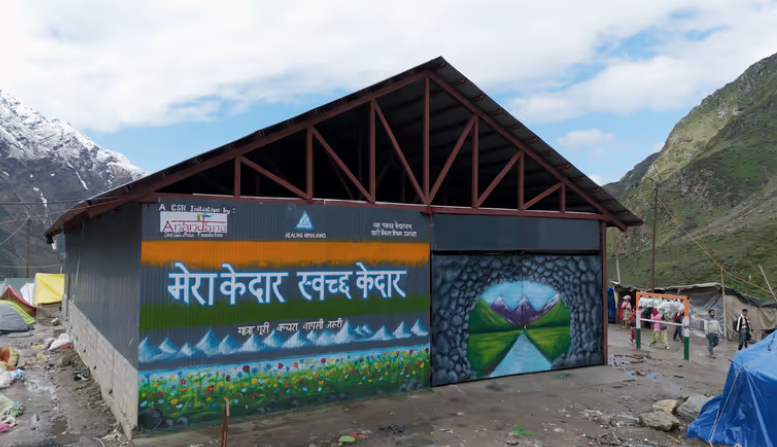
t the heart of the initiative is a Material Recovery Facility (MRF) built near the Kedarnath Temple at an altitude of 11,755 feet, making it one of India’s highest waste management facilities. The centre collects, sorts, compresses, and prepares recyclable waste before it is transported to recycling units.
During its first operational season, the facility successfully segregated more than 12.5 tonnes of waste, while hundreds of additional tonnes are expected to be processed during the off-season. A second recovery facility is already planned for Gangotri later this year.
One of the initiative’s most innovative ideas is the #CarryMeBack campaign.
Instead of relying entirely on expensive transport systems, pilgrims are invited to carry a small bag of collected waste as they descend from Kedarnath. Even carrying just 250 grams helps reduce the burden on the mountain.
The response has been remarkable.
Within just two weeks, 1,341 pilgrims participated in the campaign, transporting 2.37 tonnes of waste to the foothills and saving nearly ₹66,000 in transportation costs. What started as a simple request has quickly become a powerful example of community-driven environmental action.
The project is now expanding by involving hotels, local businesses, and horse and mule operators, creating an even stronger waste collection network across the pilgrimage route.
Beyond cleaner surroundings, the initiative is creating local employment by hiring sanitation workers and awareness teams from nearby communities. Educational campaigns are also encouraging waste segregation among hotels, kitchens, and pilgrims, helping build long-term environmental responsibility.
Digital tracking systems have also been introduced to monitor waste movement, improve operational efficiency, and strengthen transparency across the recycling process.
For the Healing Himalayas Foundation, the mission extends beyond waste collection. The long-term goal is to build a financially sustainable circular economy where recyclable materials generate enough value to support continued conservation efforts.
As pilgrimage numbers continue to rise, initiatives like #CarryMeBack demonstrate that protecting sacred destinations is a shared responsibility. Sometimes, preserving the Himalayas begins with something as simple as carrying a small bag of waste back down the mountain.
The movement proves that every pilgrim has the power to leave behind not waste but a cleaner, greener Kedarnath for future generations.